A talk to the participants of
the Oblate program at WYD 2013
Missionary
Oblates of Mary Immaculate, 4th OMI Pre - World Youth Day program
Aparecida
(São Paulo, Brasil) - July 18 - 22, 2013
200 years of youth ministry of Eugene De Mazenod
From the
pathways of Aix en Provence to the pathways of the world
Recently I came across a story about a pastor who wanted to do some
renovations in his parish church; in view of this he went after resources in an
original way.
United Kingdom. Heavenly resources. Based on the parable of the talents the pastor
of an Anglican church at Kirkheaton, England, saw his finances increased nearly
20 times. Richard Steel, the pastor, distributed in November $550 pounds (650
euros) in 65 ten pound bills to his audience so that they could do business with
the bills they got, and build funds to do the necessary renovation of the
church. On Easter Sunday of 2013 he received nearly $12.000 euros. The basis of
his idea was the New Testament parable of the talents (Mt 25,14-29). The
parable says that a rich man entrusted his fortune to his servants in order
that they should multiply it, each according to his capacity. In the parish, an
11 year old girl manufactured several hundred greetings cards and earned $550
pounds. Another parish member made bird cages with the money and sold them for
$700 pounds. A woman came up with $280 pounds after selling home-made
chocolates. With this initiative the pastor was able to have a good amount for
the renovation which would cost an estimated $73.000 pounds.
What does this story tell us? Does it say something about Oblate youth;
about our lives as Christ’s disciples and missionaries? About the missionary
disciples that we are, sent by our faith communities, inspired by the Word of
God and also by Saint Eugene de Mazenod’s charism? This story tells us
something very simple: God does not ask a lot of things of us as we start off
nor is He so demanding. Instead, right on the outset He entrusts us with
something of value and then grants us a lot of time. He grants us the capacity
to depend on ourselves. It is this that the talent parable mentioned above
tells us. Here is a piece of it.
Matthew 25,
14-19. A man was going on a journey. He called his servants and entrusted his
possession to them. To one he gave five talents; to another, two; to a third,
one – to each according to his ability. Then he went away. Immediately the one
who received five talents went and traded with them, and made another five.
Likewise, the one who received two made another two. But the man who received one
went off and dug a hole in the ground and buried his master’s money. After a
long time the master of those servants came back and settled accounts with
them.
The pastor received a substantial amount of funds, almost $12.000 Euros.
However, we are here not to talk about money, but about values that attract us.
We have in common something that we call the charism of the Missionary Oblates
of Mary Immaculate, the charism of Saint Eugene. The word charism comes from
Greek and stands for something of important pecuniary value, at the level of a
gold bar. It is a gift of grace that someone receives from the Holy Spirit. It
means, therefore, a free spiritual gift that comes from God, entrusted to a
person in order to put it at the service of others. A charism may have an
enormous yielding. With another metaphor, it is something like the mustard seed
that becomes a big shrub.
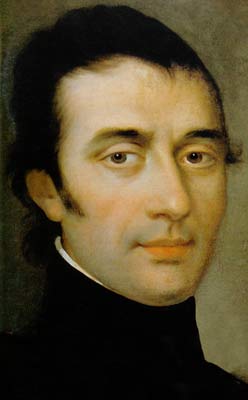
The high-yielding gift entrusted to Saint Eugene which we call “Oblate
charism” can be followed with amazement throughout the two centuries of past
history Let us go back to 1813. In that year in Saint Eugene’s life that
mustard seed took stronger roots and began to develop its first branches in the
ministry of the young priest.
Up to now we have introduced our theme about the special gift entrusted to
the Founder of the Oblates in which we also want to participate. Let us ask
him: Saint Eugene, share with us the gift you have received! We want next to
explore a few ideas which hopefully will encourage us to value the Oblate
charism even more. We shall start with something about Saint Eugene himself,
and then we will focus on the present time Missionary Oblates. We will then
take a look at Our Lady Aparecida and at the 28th World Youth Journey. We shall
conclude with some considerations on Oblate youth.
Two hundred years ago the
Oblate charism was becoming visible in the life of a young priest, Saint
Eugene.
What is the content of the Oblate charism? In a nutshell, the Oblate
charism is made up of oblation (an offering) to Christ the Saviour; of sharing
of the bread of the Good News with the poor and abandoned of this world; of
fostering community life with a family flavor. This is a synthesis. Let us take
a look at how all of this began.
I invite you to go back two hundred years, and to imagine you are in Saint
Eugene’s city, Aix-en-Provence, in France. We will limit ourselves to the year
1813. 24 years have already gone by since the French Revolution. Eugene has
been able to return to his country after a 10 years’ exile. Napoleon Bonaparte
is now in charge, imposing his views inspired by the Revolution. A year and
some months ago Eugene has been ordained a priest and is now beginning his
pastoral work. He does not start off in a parish because he wants to reach out
where parishes don’t. The Congregation has not yet been founded. Saint Eugene
is living at his mother’s house with Brother Mauro, a homeless monk thrown out
of his convent by the French Revolution.
In 1813 Eugene already says of himself that he is the priest of the poor.
He preaches Lent sermons in the “Provençal language” to the domestic servants
at a six o’clock morning Mass. You may have heard or read some of his words
from his 1813 Ash Wednesday sermon, words I repeat here.
The Gospel must be taught to all, and it must be taught in an
understandable manner. The poor… our Divine Savior gave them so much importance
that He took upon Himself to instruct them, and gave as a proof that His
mission was divine the fact that the poor were being evangelized. Oh you, Jesus
Christ’s poor, the afflicted, the miserable, the sick, the sore-covered, those
oppressed by misery, my brothers, my dear brothers, my respectable brothers,
listen to me. You are sons of God, brothers of Jesus Christ, heirs of an
eternal kingdom… I say to you, in the words of Saint Leo: Christians, be aware
of your dignity.
Some three weeks later, he gives a talk on confession to the same people.
He says openly that he does so because he feels himself “called by his vocation
to be a servant and priest of the poor”.
Besides the domestic servants, he
commits himself to the prisoners and to the youth. We have the Minutes Book of
the Youth Association founded by him. It starts on April 25th, 1813. There we
read the following analysis Eugene makes about the society of his time. He
begins by stating that Napoleon Bonaparte wants to destroy the Catholic
religion. He then goes on saying:
The means he counts on is the vilification of the youth. The success of his
measures is amazing. Ungodliness is stimulated… materialism is promoted and
applauded. The youth has been educated to not recognize another God but
Napoleon.
Being myself a sad spectator of this torrent of evils, should I content
myself to moan for them in silence without bringing any remedy
whatsoever?...Very well, I am also going to work with the youth; I will try to
preserve it from the evils that threaten it. The youth is in part already
affected by those evils. I will inspire them to love virtue, to respect
religion, to have a taste for piety and horror of vice.
In the midst of so many activities of his, Eugene does not forget to care
for his prayer life which is intense ever since that experience of Christ on a
Good Friday, six years ago. Summarizing his retreat toward the end of 1813, he
upholds the following.
I am very much resolved to seriously work for my perfection, for my
conversion which still is quite deficient. The foremost defect of all is pride
and what feeds it: conceitedness, self-love, an excessive tendency to speak
well of what I do… an enormous negligence also, or to speak frankly, a true
laziness in applying myself to the duties of piety.
Some of his resolutions are: to get up very early for prayer before Mass,
to do examination of conscience and New Testament reading after breakfast; to
ask Brother Mauro to reprehend him at morning prayer about his shortcomings.
Already in 1813 we can observe the characteristics of what later on would
be called the Oblate charism, and what we mentioned above: personal surrender
to Christ the Savior, sharing the bread of the Good News with this world’s poor
and abandoned (the youth, in this case); and cultivating community life with a
family flavor. Eugene gives high priority to prayer and Bible reading in order
to stay close to Christ the Savior. He defines himself as the priest of the
poor and also of the youth; and lives in community with Brother Mauro.
To end our trip through his times, 200 hundred years ago, we can today ask
ourselves:
- Today, are we staying close to the Lord whose
calling we have perceived at some moment in our lives?
- Do we know how to analyze our society? What do we
say about her? Which faces of the poor and abandoned people come to our
mind?
- As Saint Eugene did, do we receive support for
our journey in some companions who can help us to stay on the good path?
Let us now take a look at the Oblate Congregation today. Its members use to
ask regularly this same type of questions. A few surprising directives always
come out of the General Chapters that happen every six years. The last was in
2010; since we all belong to the broader Oblate family I share with you some of
our resolutions in view of a greater yield from the talent of our charism. The
theme of the last General Chapter was very simple: “conversion”.
A call to conversion – the
Oblate Congregation today
Listening to Saint Eugene and looking at reality around us –and thinking
also about the 4.000 Oblates in the five continents- we realized the need of
something of pivotal importance: our conversion; and more specifically, our
conversion to Christ. We felt that we need to recognize again Christ as the
center of all. The General Chapter document points out different areas of
conversion, but each sections begins with the same words: “Jesus Christ is the
center of our life and mission…” This is repeated five times in the specific
themes of the Chapter.
As we speak of conversion, we may think above all in leaving behind vices
and sins. This is necessary, but at the last Oblate Chapter conversion was seen
as something essentially positive: to recognize Christ as the center of all.
This way of facing conversion coincides with a thought an Oblate shared with us
before that assembly. He proposed as an inspiring text in view of conversion
the parable of the treasure buried in the field.
The kingdom of heaven is like a treasure buried in a field, which a person
finds and hides again; and out of joy goes and sells all that he has and buys
that field. (Mt 13,44).
One does not attain conversion simply by realizing that something goes bad.
In order to turn myself away from something wrong I need to find an
alternative, something that is worth the change of life. Only when that man of
the parable finds a hidden treasury he has sufficient motivation to sell all
his possessions.
About three years before the Chapter, the conversion theme showed up
clearly in a preparatory assembly. Someone said: look, we have several very
nice documents; we are in agreement more than ever about common directives.
Only one thing is lacking: to put it all into practice by converting ourselves.
One of the provincials added: all of our proposals are very good; I am in
agreement; but where to find people to carry them out? I believe we all went
through similar experiences: people recognize that we must do this or that, but
who will take the initiative? We are often fed up with so much talking; our
desire is that someone would offer his hands to prepare a meal, his mouth to
announce the good news, his mobile phone to invite others, his feet to walk the
neighborhood.
Saint Eugene was doing much of this as of 1813, although without mobile
phones. It was not a question of big undertakings, but of initiatives that were
able to proliferate because they came from his contact with Christ the Savior.
Our saint’s heart was beating in unison with the heart of Christ the Savior.
Each Oblate General Chapter repeats to us that our charism is a gift of the
Holy Spirit; that valuable golden talent which is the Oblate charism keeps on
maintaining its great value, but it needs to be put into practice in order to
yield more. Only then we live and act “for God’s glory, the Church’s good and
the salvation of souls”, as Saint Eugene would say.
The Chapter document mentions five areas of conversion: our community, our Oblate
mission, leadership and authority, formation and financial administration. The
relationship with Christ is not mentioned as an area but as something
transversal. There are many Oblate internal issues that do not interest us; but
we can find a few points that could inspire you even as Oblate youth so that
Christ may occupy the center of our lives as persons and group. I mention the
following:
1. Community: witnessing, corresponsability, reconciliation, prayer,
ongoing formation and intercultural issues.
2. Mission: to recognize Christ’s face in the faces of the poor within the
social context of our countries, such as migrants, Aids victims, undocumented
people, war victims, indigenous people; to uphold their rights and dignity. May
we also recognize Mary as integral part of our missionary experience!
3. Leadership: to become leaders like Jesus who came not to be served but
to serve.
4. Formation: a deeper missionary spirituality; integral human development.
5. Finances: to follow Jesus in His solidarity to the poor; prudent,
transparent and professional administration; seek financial resources in order
to sustain our formation and mission.
I offer these issues taken from the document; later on perhaps someone may
deepen what these resolutions may mean as regards the Oblate youth. I want to
point out one thing. I do not know which of these issues call your attention
but as for me, I am impressed that the first issue mentioned is community. I
believe, in fact, that any missionary activity and all the rest will not be a
problem if we have a religious community, a youth group or a group of Oblate
associates centered on God our Father, on Christ and on the Spirit.
Regarding this it is interesting to reread and meditate Acts 13.1-3.
“Now there were in the church at Antioch prophets and teachers; Barnabas,
Symeon who also was called Niger, Lucius of Cyrene, Manaen who was a close
friend of Herod the tetrarch, and Saul. While they were worshiping the Lord and
fasting, the Holy Spirit said, “set apart for me Barnabas and Saul for the work
to which I have called them”. Then, completing their fasting and prayer, they
laid hands on them and sent them off”.
We can see here how the imponderable missionary activity of the Apostle
Saint Paul starts from the community of Antioch of Pisidia; it is the place
where the disciples were called Christians for the first time. Antioch had
reached a certain maturity and counted on certain resources as regards to
people with a good formation, and they were very attentive to the Holy Spirit.
In the community where the Holy Trinity abides we will find the secret of
missionary fruitfulness.
Our Lady of Aparecida
In the midst of all these reflections we do not want to forget that our
group of friends and associates of the Oblate charism is on a pilgrimage these
days. Having arrived from all over the world, we were welcomed in the town of
Our Lady of Aparecida, who is Brazil’s holy patroness. We will soon find
ourselves on our journey to Youth World in Rio de Janeiro. We could say that
the whole Church is on pilgrimage; our new Pope Francis represents the whole
Church and he will be with us.
How can we come to an understanding of our pilgrimage from the viewpoint of
the Oblate charism? If we succeed in understanding something here as we keep
moving as pilgrims, perhaps we will come to grasp what is our place in the
Church and in the world; and in what sense the contribution of the Oblate
charism is important and even necessary to the Church and to the world; as our
Superior Geral, Louis Lougen said in his visit to Paraguay: “I have a great
hope for the Congregation. The Church needs our charism!” And he goes on:
“There are several signs of hope”; and he points out as the first of these
signs: “The Church has to go to the forgotten people; we Oblates are already at
their side”.
When I recently read the story of Our Lady of Aparecida’s famous image, I
felt that it could tell many things to the Oblates family. The small statue is
humble, mud-made and was found nearby at a river by three humble fishermen. The
center part of the statue showed up first; then, the head; and after finding
the statue they caught a lot of fishes. This happened in 1717. The devotion
began in the house of one of the fishermen, home to the Felipe Pedroso family.
Later on people managed to build first a chapel and then a church. The actual
basilica is very big; its construction began in 1946; it was consecrated by
John Paul II in 1980. Since 1929 Our Lady of Aparecida is officially the
patroness of Brazil. The Lord does wonders, with the most humble people’s faith
as a starting point. This is what now and then we experience in our Oblate
mission as well; for example, in missions with youth. It is not surprising that
this is so, since the Virgin Mary has described herself as a humble slave, and
as such she sings the Lord’s greatness who does great things through her (Lk
1,46-38).

The town of Aparecida is well known in Latin America for another reason; in
2007 there happened the last General Conference of the Bishops of Latin America
and Caribe. People from other continents usually do not realize the impact that
these meetings and their documents, such as Medellin, Puebla, Santo Domingo and
Aparecida, have in the lives of the churches of our continent. I want to point
out two things.
1º. The Aparecida meeting was the fifth one; it confirmed once more the
famous preferential option for the poor that the Church must make. Pope
Benedict XVI said in his speech to the bishops: “The preferential option for
the poor is implicit in the Christological faith in the sense that God made
Himself poor for our sake in order to enrich us with his poverty”. In other
words, God became poor for our sake; therefore we must also make the
preferential option for the poor. In reality it is not an option, it is a
mandate. To Saint Eugene’s followers this Aparecida message tell us that our
Oblate charism is not something marginal in the Church, but rather it falls
within the dynamics of God’s incarnation.
2º. Another point that makes me feel that the Oblate charism was always at
the heart of the Church is the strongly missionary orientation that the
Bishops’ Conference gave us in Aparecida for the Church in Latin America. Since
then, year after year the so-called Continental Mission is launched and
re-launched, so much so that it became a slogan: Christians must see themselves
as “disciples and missionaries of Jesus Christ”, as pointed out in the very
title of the final document.
This reminds me of what some years ago the
diocesan priest Segundo Galilea, one of the liberation theologians, said in a
talk to Oblate formators.
Ever since have I known the Oblates, first in Chile and then in Bolivia,
México, Peru and Sri Lanka, the only thing they always emphasized was that they
were missionaries. This is the missionary mystics that always called my
attention… this missionary mystics is lacking in Latin America. There are
exceptions as mentioned before. You who belong to missionary congregations can
help us very much about this. Do not simply become conventional priests, a few
more diocesan priests. What has to be done is to communicate to the youth and
to ourselves this missionary mystics. (Lima, February of 1982)
The reflection on mission takes us the other destination of our pilgrimage,
Rio. It is with joy that we acknowledge the fact that the Catholic Church
proposes mission as the theme of World Youth Day in Rio de Janeiro!
The 2013 World Youth Journey: Go, therefore, and make disciples of all
nations…
This will be the 28th world youth day. I have been involved with World
Youth Days in the past, especially participating in several Oblate pre-WYD
programs; Italy in the 2000 Jubilee year; Germany in 2005, and Melbourne and
Sidney in 2008.
To recall the themes of the three World Youth Days just mentioned may be
of interest; here they are: 1. The Work became flesh and made his dwelling
among us (Jo. 1.14); 2. We have come to do him homage (Mt2,2); 3. You will
receive power when the Holy Spirit comes upon you, and you will be my witnesses
(Acts 1,8). To me, there is a crescendo towards a more missionary orientation
up to the present theme for Rio: Go, therefore, and make disciples of all
nations… (Mt 28,19).
In order to prepare ourselves, and also to have at hand some ideas for our
modest Oblate contribution, I propose to you to analyze, word by word, that
phrase taken from Matthew’s gospel which is the big theme in Rio de Janeiro.
What does Mt 28, 29 tell us? It is the second last verse of Saint Matthew’s
gospel. The Risen Christ speaks to the eleven disciples who are witnessing His
last apparition in Galilee at the hill indicated to them. Despite some doubts
on the part of a few of the eleven they kneel down. And they are sent on
mission: Go, therefore, and make disciples of all nations. How do we perceive
this phrase from an Oblate heart? You will do better than me at listening to
this phrase, for it is especially to you that Jesus wants to talk during the
long hours of this journey that we will face together. Here follows a few
clues.
Go… The first thing in mission is to obey the sending and set oneself on
the way. Everything will have to be left behind, the things we are used to, and
we will have to set out on foot towards the unknown. This journey may take a
lot of time and it is not hazard-free. It is only when we approach our mission
place that “we will be shepherds smelling after the sheep”, as Pope Francis
said;
Make disciples… A disciple is someone who accepts to learn and let the
master teach him. The master is Jesus Christ. The missionaries will not be
satisfied to get people entering our ranks with a superficial commitment just
increasing numbers, but with a pledge that would be short-lived. We have
received the mandate to make people true disciples, to make them feel hunger
and thirst for God and His kingdom on earth; disciples with ever-growing need
for formation throughout their lives. For sure, to demand this from others, we
ourselves must grow in Jesus’ discipleship.
All… Several times Jesus speaks to us about incomplete numbers; there were
ninety-nine sheep but one was missing; there were 10 coins but one got lost. He
then does not conclude that certain losses are inevitable, nor does He
highlight statistically good results. Rather, He wants to have all included. I
believe that is what also the Oblates always had at heart, when they went as
far as close to the North Pole, or dedicated their lives to minority ethnical
groups in several continents, such as the to the natives in the Paraguayan
Chaco all way back in 1925… The good news must reach all the peoples; all the
persons; this is what Jesus wants. Not even one in a hundred may stay away from
this news that is meant to transform and give life. Nothing must be wasted.
All nations. It is interesting that Jesus does not use here the word “soul”
or “person”. Rather: “Make disciples of all the nations”. A conversion may
happen in persons one by one, as it did to Saint Paul, for example; but the
missionary mandate charges us to reach out to all cultures; it asks us to turn
into disciples people within their boroughs, surroundings and customs. This
will be somewhat hard, but it will give rise to much creativity: in music,
arts, public manifestations, social works, in struggle for justice, in
prophetical interventions and dissents, in witnessing, even in martyrdom which
is frequent in our days.
I cannot imagine, yet, what Rio de Janeiro will look like with its youthful
multitudes -disciples and missionaries- that represent in some way all the
peoples. It will be a sign that the mission which the Risen Christ has
entrusted to us is in full process. With Him we will go further and further.
Yes, in Rio we will feel His presence in the support, prayer and vitality of so
many Christian youths.
The Oblate Youth
Sure, we will be meeting so many people, and this will encourage us.
However, the big gatherings are not something we experience every day, it is
not our daily bread. Who will help us to maintain our fervour and cheerfulness
afterwards? We will need something more modest, something within our arm’s
reach.
A particular charism, such as of the Oblates, has also this function: to
offer spiritual food to a special group of people. It is like in the civil
society; we all belong to an ethnic group, to a country, and sometimes we will
feel this identity very strongly. But we also have a need of a family, of a
borough, of friends.
It is not a question of evaluating which borough or family is better or
bigger; the important thing is that we feel them as ours.
A charism such as of the Oblates works this way: it places the great
mystery of Christ at our reach. The saints deepened in their lives only two or
three things about their faith; and this they did well and attracted others. If
we let ourselves be attracted, we will feel ourselves as a spiritual family. In
this way many different groups arose around Saint Eugene. Already at his time,
besides the Oblates, there were lay people who leaned on him for support,
beginning with his “Christian Youth Association established at Aix under the
auspices of the Most Holy Virgin Mary” that began to take its first steps
exactly 200 years ago. Already in the life of the Founder there was a desire to
include laypeople, but this took some time to mature.
Later on in Oblate history there came about the MAMI (Mission Association
of Mary Immaculate) about the year 1.900; the Lay Associates around the year
1.980, soon with participation of young people. After the World Youth Day in
Sidney, Australia, the first global Oblate encounter of animators of our
mission with youth took place right there. A survey of this time showed that
the Oblates were in touch at world level with some 40.000 young people. The
ways of organizing the “Oblate youth” are multiple but there are
characteristics in common. I presented them in a recent article as follows:
The Oblate Youth is formed by young people impassioned for Jesus Christ,
who at the manner of Saint Eugene, see themselves as missionaries and love the
Church. The Oblate Youth keeps a live connection with the Oblates, normally
with a community.
Conclusion
We have touched upon many themes which have to do with our pilgrimage: the
Oblate charism yesterday and today; Aparecida; Rio de Janeiro; and the Oblate
Youth. All of this was put together in the beautiful symbolical logotype for
the Oblate pre-youth day program. The four letters “J-O-M-I” mean “Oblate
Youth”. The green color represents the Brazilian forest, and also means “hope”,
as offered to the youth. The blue denotes Our Lady. Her mantle stretches over
the whole of the logo. The “M” of Mary is embellished with the stars of the
Southern Cross. The yellow reminds us of the sun; in the same color Christ’s
statue of Rio is reproduced, and the “I” of Mary Immaculate. The logotype
reminds us that the journeys we are undertaking throughout Brazil are not
tourism, but rather faith and witness pilgrimages. We were called to
participate in these youth days in order to receive and give, so that faith may
increase ever more in ourselves and in others. “Faith grows stronger when
shared”, said John Paul II in his mission encyclical. As we live these
encounters with enthusiasm and delight, we are reminded of our future
commitment. The whole world, and especially its youth needs very much whatever
amount of faith we can share with them. I am sure that the Oblate Youth will
contribute its grain of sand in order to make all people disciples of Jesus.
The majority of Oblate youth members will continue as young laypeople, and some
may discover a vocation of special religious consecration. The gift of Oblate
charism which Saint Eugene himself feels happy to share with us, will yield
abundant fruit if the Lord grants his blessing.
Fr. Wilhelm Steckling, OMI April 2013


